3.03.2008

From Indiana to India and Back

Since I returned from India a little over a month ago, I have been trying to distill and capture my impressions, emotions and experiences into a meaningful written snapshot. This has been a more difficult task than I expected as there has been so much to sort out in my own processing before I could write about it. Clearly this description won’t do justice to our three week experience, but I’ll try in the limits of a few paragraphs.

I didn’t expect to be overwhelmed by so many contrasts. The contrasts within India itself are great – not simply the cultural, economic and religious differences between East and West.

· The sights of women wearing bright jewel toned sarees and salwars walking on dusty, garbage laden streets.

· The aromas of fresh papaya one minute and cow manure/sewage the next. (well, the cow manure part isn't that much different than home--if you want to know the truth about it. It's just that we find that particular aroma in the countryside, not the city.)
· The hundreds of bright yellow “auto” rickshaws competing side by side on the streets with motorcycles, busses, cars and trucks, pedestrians, and cows (Oh and while riding in our bus, we were almost T-boned by a wayward cow coming from a side street at a gallop! He swerved and barely missed us.)

The biggest contrast was perhaps the overwhelming number of people. It was staggering beyond description. Over 7 million people live in metropolitan Chennai with over 2,200 people per square mile. It is one of the most densely populated places in the world. Bangalore has over 5 million people and is the third most populous city in India.

I didn’t expect to see a slum with 20+ children next door to the training center compound where we stayed. While we did invite the children over to play games in an attempt to reach them (in spite of a language barrier) I realized how much of the need for a Savior is bound to a complex system of oppression far beyond human intervention. Clearly the young girls between the ages of 11-14 appeared to be the mothers of the babies they carried on their hips. How does one begin to even think about the tangled intersection of spiritual darkness, poverty and overpopulation? What remedy is there but Jesus Christ alone who gives value and worth to every person.

I didn’t expect the generosity and hospitality of people I didn’t know. (One example is the perfectly formed small shell given to me by a poor man on the Chennai beach.) We easily made friends with out hosts, our home-stay family and several of the teachers at the schools where we went. I didn’t expect to have my heart deeply touched by the smile and hug of a Hindu orphan girl, at one of the schools we visited. I didn’t expect to see radiant smiles of the boys at the Boys Home as I showed them how to take photos of each other with my camera. I didn't expect to be served Indian coffee at every turn--and least of all -- I didn't expect to like it! (It's 40% chicory, 60% coffee, made with scalded milk and lots of sugar.)

As a team of 18 (16 students and one other co-sponsor) we prayed that people would see Jesus Christ in our performances and our lives. I asked myself “how much could we realistically accomplish in three weeks?” I have to be content with the answer that we may not know where the seeds that were planted will take root. We did meet young people who are spiritually hungry and are seeking to fill the God-shaped vacuum in their lives. And we trust that our ministry has provided an entrĂ©e for our hosts, Youth for Christ India, to begin Bible studies in the schools where young people are seeking to fill that void. Our schedule was a busy one: we presented 24 programs to about 13,000 young people. We also scraped, primed and painted the chapel at the YFC Training Center where we stayed.

So the story of our trip is still being written. I can report that we did witness God working in India. I am thankful to have been entrusted to a small role of a much bigger picture and to have been able to serve under and support YFC India. I read somewhere that Christians represent about 5% of Bangalore’s population. (Hindus 79%, Muslims 13%.) So now that I’m back at home, I have unanswered questions about all that being a global Christian means. Yet I can know and be confident that God is drawing Indian people to Himself in a myriad of different ways.

Do people return from short term mission trips changed people? I think they can be when they intentionally look for God to change and challenge them. I went to India with openness for God’s leading, wanting to be obedient to God’s direction, hoping that He would make a difference in someone's life through me. I didn’t go with a long list of personal expectations, although one of my main goals was to enable the students to have a bigger vision of God, his Kingdom and help them discover the necessity of and how they might live as global followers of Jesus Christ and to live for others more than self. (Yes, I know these are big goals!)

If there was a theme of the past 6 months--the preparations, the trip itself, as well as the culmination of thoughts about India, the ministry, the people, and resulting personal application -- it is the working out of the meanings of the words “compassion” and “gratitude.” Both have taken on new importance in my life. These two words: “compassion” and “gratitude” have come to the forefront of my life since I’ve been back because of what I have experienced and seen.

I think about and pray daily that I will have a heart of “compassion” and “gratitude” that overflows as a result of this trip. This plus the fact that my heart has been humbled even more as I understand the sacrifice Jesus Christ extended to me. It's because of Him that I’ve found I want to express a joyful life of compassion and gratitude.

This hasn't always been easy, quite honestly. There are people in our lives who are difficult to relate to and to love. But I recognize how I need to offer compassion and gratitude regardless of their response. People don't always respond in kind. They even reject our attempts in caring for them and offering what we have to give. And this trip reminded me of how I need to have Jesus' heart of compassion and humility. When people reject our attempts, when they pull away from a sympathetic touch on the arm, when the draw back emotionally, we have to keep offering compassion and gratitude in the face of that rejection. Because that is what Jesus did, too. He faced rejection by his best friends and the whole world and He loved them anyway. So, our scale is pretty limited in comparison.

My convictions for living in gratitude and compassion as central to daily life have fueled a passion for serving God in a fresh and renewed way. I don’t know where or how that will lead. I've just been taking it one day at a time. I don't want the India experience to be the sort of momentary spiritual "feel good moment" that evaporates a few weeks out. I don't know if or how people will see changes my life, but I pray that this heart change will extend to actions that will spur others to compassion and gratitude.

In case you can't tell, I've grown to love India! I've grown to love the lessons that God has taught me because He has shared more of Himself with me over the past months.

So that's my story. To God be the Glory!

India photos


Here are some more photos of India

India


Here are some photos of my trip to India.

8.16.2007

6.04.2007

Social Networking and Libraries: recent blogs, articles, sites and links

BLOGS of people to pay attention to:

Stephen Abram: Stephen's Lighthouse. Abram has his finger on the pulse of libraries and all manner of new technologies. This is one of the best blog's in the profession, hands down.

Gerry McKiernan: Friends: social networking sites for engaged library services "is devoted to application and use of online social networking sites (Facebook, MySpace) for all types of library-related programs and services."

David Lee King: www.davidleeking.com
recommends Twitter -- a global community of friends and strangers answering one simple question: What are you doing? Answer on your phone, IM, or right here on the web. David Lee King of Topeka & Shawnee County Public Library has a great blog discussing emerging new media from a librarian's perspective. His entry is Twtter Explained for Librarians, or 10 ways to use Twitter may give librarians some ideas for future applications.

Meredith Farkas. The Social Software in Libraries site is a companion to the book: Social Software in Libraries by Meredith Farkas (2007). The book covers many relevant topics including: Blogs, Blogs in Libraries, RSS Feeds, Wikis, Online Communities, Social Networking, Social Bookmarking, Synchronous Online Reference, Podcasting, and Future Trends in Social Software. The site includes links to other resources.

Meredith Farkas' blogs are Information Wants to be Free and TechEssence She has also created a wiki: Library Success: A Best Practices Wiki for librarians.


BOOKS AND ARTICLES:

Chad, Ken and Paul Miller. Do Libraries Matter? the rise of Library 2.0.
http://www.talis.com/applications/downloads/white_papers/DoLibrariesMatter.pdf

Coulter, Priscilla. "Blogging It into Them: weblogs in information literacy insstruction. " Journal of Library Administration; 2006, vol 45. issue 1/2. p 101-15. This article describes blogs as a means of supplementing face-to-face information literacy instruction and library outreach to graduate students and distance education.

Farkas, Meredith. "Going Where Patrons Are." American Libraries. April, 2007, p 27. See comments about Farkas above.

Gardner, Susan and Susanna Eng. "What Students Want: Generation Y and the changing function of the academic library." portal: Libraries and the Academy, 2005, vol. 5, no. 3, p. 405-420.
This article presents the results of a 2003 user survey of library use among undergraduates.

Gordon, Rachel Singer. The NextGen Librarian's Survival Guide. Medford, NJ: Information Today, 2006. (978-1-57387-256-0) This is a book designed primarily for librarians but would be good information for all of us. Singer-Gordon writes a regular column for American Libraries also.

Hewitt, Anne and Andrea Forte. "Crossing Boundaries: identity management and student/faculty relationships on the Facebook" This is a description of a poster based on a 2006 survey on perceptions of faculty who use facebook. Results indicated that 1/3 of students surveyed did not believe that faculty should be present on Facebook at all.

Huwe, Terence K. "Some Best Practices for Personalizing Outreach." Computers in Libraries. Feb. 2006, vol 26, no 2, p 36-38. Considers blogs, RSS and creating personalized outreach services. There are some interesting possibilities for libraries

Lackie, Robert J. "WEB 2.0 and Its Technologies for Collaborative Library Communication." MultiMedia and Internet @Schools. Nov/Dec. 2006. vol 13, no. 6, pp 9-12. Talks about blogs, RSS feeds, del.icio.us, wikis.

Lenhart, Amanda and Mary Madden. "Social Networking Websites and Teens: an overview" Pew Internet and American Life Project. Jan 7, 2007. The Pew Internet and American Life Project is a great resource for current data. I have found they keep the finger on the pulse of numerous aspects of our culture that directly relate to the internet as well as our spiritual lives.

Lorenzo, George; Diana Oblinger and Charles Dziuban. How Choice, Co-Creation, and Culture Are Changing What It Means To Be Net Savvy. Educause Learning Initiative. ELI Paper 4. October, 2006. Discusses current culture changes and how higher education can respond and adapt to Web 2.0.

McDonald, Robert H. and Chuck Thomas. "Disconnects between Library Culture and Millennial Generation Values." Educause Quarterly, 2006, p. 4-6. What are the gaps of services we provide? McDonald and Thomas discuss how libraries need to pay attention to "embedding themselves and their resources into the everyday tools, spaces and activities of today's learner."

see also: Chuck Thomas and Robert H. McDonald, "Millennial Net Value(s): Disconnects Between Libraries and the Information Age Mindset" (August 15, 2005) Florida State University D-Scholarship Repository, Article #4. http://dscholarship.lib.fsu.edu/general/4

Mathews, Brian S. "Do you Facebook?" C&RL News. May 2006. p 306-7. Matthews was one of the first librarians to write about library applications using Facebook among Georgia Tech students.

Peek, Robin. "Librarians on Second Life" Information Today. Feb. 2007, vol. 24, no. 2, p. 15-16
Pierce, Jennifer Burek. "Who's on Second?" American Libraries. Feb. 2007, p. 46. Two articles about Second Life, creating an avatar, and librarians who "play" and "live" an Info Island life.

Rosedale, Philip as told to Michael Fitzgerald. "Only the Money is Real." Inc. Magazine, Feb. 2007. p. 81-85. What is Second Life? This article explains the basics. It's more about the financial viability in the for profit world. Not directly about libraries.

Sauers, Michael P., Blogging and RSS: a librarian's guide. Medford, NJ: Information Today. 2006. (978-1-57387-268-3) Looks like a promising book for libraries who want to explore library applications of blogs and RSS.

Stone, Brad. "The Battle over YouTube." Newsweek. October 9, 2006. p. 48-49. This is one of thousands of articles on YouTube and their copyright issues.

Tapscott, Don. Wikinomics: how mass collaboration changes everything. 2006. This book looks promising. Don Smeeton recommended it in his presentation on Library Thing.

SOCIAL NETWORKING WEBSITES

Wikipedia's List of Social Networking Websites

LINKS:

Facebook

Itunes

YouTube

LibraryThing

Second Life

MySpace

BookSwim

OTHER

ALA TechSource This is a good source for learning the latest: Drupal, Joomla, Moodle...This links to the TechSource blog but there are also reports, newsletters, and other info.

Academic Librarians: have laptop will travel. David Rothman has posted on his blog a nice video describing Macon State College Library's "Laptop Librarian" program. Rothman's blog is primarily related to medical librarianship but this video describes an innovative way for the librarian to meet students "on their turf."

Thomas, Deepak and Vineet Buch. YouTube Case Study: Widget marketing comes of age
Start-up Review: analyzing web success

Podcasting

Digital Campus. George Mason University. Center for History and New Media.

Episode 01 - Wikipedia: Friend or Foe?
Episode 02 - The Old and the YouTube
Episode 04 - Welcome to the Social

These are engaging discussion by knowledgeable people who think about the implications of new media applications in the academic classroom. Thanks, Peter, for suggesting this site.

4.21.2007

Notable Book Challenge

I'm taking the challenge! I've started by reading these four books:

READING LIKE A WRITER: A Guide for People Who Love Books and for Those Who Want to Write Them. By Francine Prose.

THE LOOMING TOWER: Al-Qaeda and the Road to 9/11. By Lawrence Wright.

THE PLACES IN BETWEEN. By Rory Stewart.

IRAN AWAKENING: A Memoir of Revolution and Hope. By Shirin Ebadi with Azadeh Moaveni.

I am happy to say that I have completed the first three thus far this year.

Actually I am not quite finished with Iran Awakening, but should be done in the next day or so. It is engaging, and I am enjoying it. I know I will complete it.


The final non-fiction book on my list will be: THE OMNIVORE'S DILEMMA: A Natural History of Four Meals. By Michael Pollan. I have read The Botany of Desire so am eager to see what Pollan has to say. I am thinking about adding 5 books from the fiction list. I have one of them already. So, I think that will make a fine challenge: 5 non-fiction and 5 fiction.

What a lovely idea.

4.18.2007

Wikiality, Truthiness, and Stephen Colbert

Wikiality: the idea that if you claim something to be true and enough people agree with you, it becomes true. --from Stephen Colbert, The Colbert Report*. (*links to the clip from the Word part of the show where Colbert defines wikiality by checking Wikipedia for what he had said about Oregon as Washington's Mexico or California's Canada.)

Truthiness (noun)
1 : "truth that comes from the gut, not books" (Stephen Colbert, Comedy Central's "The Colbert Report," October 2005)2 : "the quality of preferring concepts or facts one wishes to be true, rather than concepts or facts known to be true" (American Dialect Society, January 2006)
--
http://www.m-w.com/info/06words.htm (Merriam Webster dictionary)

How is it that I have missed Stephen Colbert's show until now? Well, it might be because I don't watch TV--hardly ever. But I found a link to this Word segment. We could have a long and healthy discussion about the meaning of truth based on its changing definition.

Yikes. There's more to come on this topic...

4.17.2007

Digital Hemlock

I haven't read the whole book but I did find some thoughtful quotes from this book:

"The more public the information, the more meaningless it is. The most significant personal knowledge is rarely shared. To upload a self onto the world wide web is to share the most irrelevant, public part of identity." p. 59

"A book can be flicked through, just as a hypertext link can be jumped, but electronic information encourages a smash and grab style of reading, rather than a smoother, more reflexive meditation. The key for teachers and the library profession is to show students and the public how to use divergent modes of reading and research. ...with dense historical description and high theory the reading is slow, drifting along with the sensuality for the words, so that detailed and intense meanings may emerge." AND " The materiality of searching, the evocative potential of exploring an exciting array of potential sources is still a significant part of an intellectual journey. Particular cultural practices have been lost through the electronic age: flicking through a card catalog, dialing a telephone or winding down a car window. Everyday life has changed, desensitizing corporeality and tearing the sensual surfaces of a textured life." p. 85

"The Internet is not a library--this is a dangerous metaphor."

"The desire to be someone else online is an act of denial as well as empowerment ." p. 124

Digital Hemlock. Tara Brabazon.

4.04.2007

In My Language


I happened onto this video today. It moved me so much I watched it twice. And since I wanted to learn how to upload YouTube videos to my blog, I thought I would give it a go.

In My Language gave me lots to think about regarding autism, cognitive abilities, and personhood. I began to consider the subject in a totally different way. I have known people who were labeled "mentally retarded" and truly, they are seen as non-thinking, non-persons. We look upon them as helpless and weak. We pity them. And we have seen them taken advantage of. We might have even taken advantage of them ourselves.

I've wondered about it for a long time. How is it that God made them, too? Is there something we can learn from the autistic? How does this video relate to the verse: "But God chose what is foolish in the world to shame the wise. God chose what is weak in the world to shame the strong; God chose what is low and despised in the world, even things that are not to bring to nothing things that are, so that no human being might boast in the presence of God. He is the source of your life in Christ Jesus, whom God made our wisdom and our righteousness." --I Corinthians 1: 27-30.

It makes me want to be more compassionate and more loving to people who don't have the same advantages that I do. It makes me think that there will be a whole different paradigm in heaven. I'm humbled by that thought and by the fact that I need to pay attention to my surroundings in a different way.

4.03.2007

Christ the Lord: Out of Egypt--Holy Shoddy is Still Shoddy*

I wasn't going to waste any bandwidth on this but here I go. Something keeps bugging me. I just bought N.T. Wright's latest book Simply Christian yesterday. And who is writing cover reviews of it? On the back cover: Will Willimon, Walter Brueggemann, John Ortberg, J.I. Packer--great. All theologians. All excellent writers. All scholars. All solid.

What raised my eyebrows is the quote on the front cover says: "This will become a classic." --Anne Rice, author of Christ the Lord: out of Egypt.

So, where does she come off as qualified to assess N.T.Wright's writing? She writes crappy vampire books, has a Christian conversion, writes one shoddy piece of imaginary fiction on the missing years of Jesus the Christ as a young person that seems to me to be based on Gnostic writings, and she is given front cover billing on N.T. Wright's book. There's something wrong with this picture. Maybe I've connected the wrong dots. Maybe there's something I've missed.
Maybe it's because I respect Wright and hold his writing up to high esteem. As I do Packer, Ortberg whose books I have also read.

What is this world coming to? Do people in the publishing world know that she writes trash? Does she have any theological training? What qualifications does she bring to evaluate theology? Does the publishing world think the reading world is stupid? (uh, don't answer that!) How do publishers choose who writes those blurbs anyway?

Elton Trueblood's line "holy shoddy is still shoddy"still fits.

Here's the review of Christ the Lord: out of Egypt I posted on Library Thing.

When I read this book for my book club a few months ago, I couldn't figure out why Jesus and some of the other characters laughed so much. The word "laugh" is so overused, and it puzzled me. I thought surely the author could have used various synonyms: smiled, giggled, grinned, cackled, snickered, guffawed...you get the idea. Then I read "Judas and the Gospel of Jesus: have we missed the truth about Christianity" by N. T. Wright, and then the light bulb went on. Rice is writing this book from a Gnostic point of view. Wright indicates that "laugh" is a Gnostic code word of sorts. Since reading Wright many things make sense to me now. Also part of the book takes place in Alexandria, and in it Jesus studied under Philo. Wright comments that Philo is associated with gnosticism in "The Last Word" which is about scriptural authority. Rice may profess Christianity, and Christianity Today had a nice little puff piece about her conversion. Ultimately she would have to rely on extra-Biblical writings to create the young life of Jesus of which canonical scripture is silent. Even in fiction there has to be some historical basis. When I read this book at first it struck me as "just ok". But now I can't recommend it at all. Her worldview is poles apart in subtle kind of sneaky way from mainline scripture. She has followed after the extra-biblical, non-canonical stuff quite cleverly. I am somewhat amazed that there hasn't been more mentioned about this in the press by people who are experts in Biblical times. In fact I don't think I've seen anyone who has questioned it in this way. I think her writing skills and historical research are extremely weak. Very disappointing. I think this book is riding the coattails of the Davinci Code mania to sell a few books. 4/1/07

*thanks to Elton Trueblood, this is still a timeless truth.

I'd really like to know from Biblical scholars what they think about this book.

OK. I think that's enough thinking for today. I'm going to go take a nap.


Can we ever do too much thinking?


This is me this week. It's spring break, and I'm having a delightful time. So far I have had some good times of just "thinking." I don't think I do enough of it. Do you? What do you think about when you sit down for a rest? What do you wake up thinking about? What do you fall asleep thinking about? Thinking is definitely underrated. We should do more of it, I think.

Ok, now I've got to get up and "do" something. Of course, there are all of those requisite jobs such as laundry, grocery shopping, etc. to catch up on. See what I mean. We always think we have to get up and do something.

Now I'm reading Anne Lamott's Blue Shoe. I can't say that I'm really getting into it that much. I think her strength lies in the personal narrative, essay. I read Rosie which is also fiction and liked it. But Blue Shoe just hasn't grabbed me so far. I should finish it today. Who knows what I'll think about reading next.

By the way, I found a great site for free images. Stock.xchng: http://www.sxc.hu/home. I think it's pretty nifty.

4.01.2007

Grey's Anatomy


I just downloaded all of the episodes of Grey's Anatomy from Itunes. If you know me well you know the reason I like this show is that it takes place in Seattle. I just learned that it is filmed in California, but there are some nice outside shots of the city. So, here's a great snippet between Meredith and Derek from the first season.

DEREK: "Seattle has ferryboats?"
MEREDITH: "Yes."
DEREK: "I didn’t know that. I've been living here six weeks, and had no idea there were ferryboats."
MEREDITH: "Seattle is surrounded by water on three sides."
DEREK: "Hence the ferryboats. Now I have to like it here. I wasn’t planning on liking it here, since I'm from New York, and am genetically engineered to dislike everywhere except Manhattan. But I do have a thing for ferryboats."

I could have a thing about ferries and Derek. More quotes to come...

3.25.2007

Water


Deepa Mehta has made an incredible movie, Water, that affected the depths of my soul. In a nutshell -- during the British colonial period of India and around this time of Gandhi, Chuyia, a child of 7-8, is given into marriage to a much older husband. He dies shortly after, and Chuyia is returned to her parents who then send her to "the widows' house." This young girl does not understand that her parents have abandoned her and that she is destined to live unvalued and shunned for the rest of her life. The other elderly women, all widows, live with the same fated life. Chuyia, like all widows, has just three options: to marry the husband's younger brother (if agreed upon by the families,) to kill herself at the time of her husband's cremation, or to live a life of celibacy with other widows. Even thought a new law permits a widow to re-marry, it is not accepted practice.

A second parallel plot involves another young and beautiful widow, Kalyani, who befriends Chuyia and meets and falls in love with Narayan who wants to marry her. When he comes to take her to his home to meet his family, as they cross the river to go to his family estate, Kalyani recognizes that his house is the same house where she had been forced to visit as a "prostitute," to be with Narayan's father. Throughout the movie I asked myself-- what will become of them, Kalyani and Chuyia? With so few options the observer is faced with the stark and real world of women in that time and place. The reality is, I feel certain that there are women today who have limited options and are forced into exile, slavery, and prostitution.

As I was watching this movie, water became a powerful metaphor for the lives of both Kalyani and Chuyia. It reminded me, too, of the book and movie, Siddhartha, which I teach in the fall. Our lives are a lot like water sometimes, as a universal theme. The tide's current sometimes takes us where we do not want to go. How apt is this movie, and how much I respect Mehta for working so hard to make a powerful movie. Definitely a 5 star winner.


3.20.2007

Amazing Grace

Some friends and I saw Amazing Grace, the movie, a while ago. It was a good historical piece about William Wilberforce, John Newton and the abolition of the slave trade. What is sad to me is that we still have human trafficking going on today. Have we learned anything from that terrible torture inflicted on other human beings? There are direct relationships to that movie going on today. Human trafficking, Darfur, AIDS orphans in Africa, human rights issues all over the world. It makes my head spin and my spirit heavy to think about it. I know God is sovereign and good. I have to believe He allows suffering for a reason. But I can't help wondering how much of the suffering of others is caused by the institutionalized carefree and selfish western lifestyle that I live. And how much of that suffering is inflicted by other human beings. This is what I can't understand. I tend more and more to a pacifist point of view. It must be the influence of Quakers in my past.

3.19.2007

Books I've Read So Far This Year

The Fifth Mountain. Paulo Coelho
Reading Like a Writer. Francine Prose
The Kingdom by the Sea. Paul Theroux
The Looming Tower. Lawrence Wright
Sacred Thirst. M. Craig Barnes
The World is Flat. Thomas L. Friedman
A Good Scent from a Strange Mountain. Robert Olen Butler
The Kindness of Strangers. Don George
Our Town. Cynthia Carr
Lest Innocent Blood Be Shed. Phillip Hallie
31 Days. Barry Werth
Christ the Lord: out of Egypt. Anne Rice
Judas and the Gospel of Jesus. N.T. Wright
How to Read Literature Like a Profesor. Thomas C. Foster

So there's been a long hiatus since I've posted on this blog. Not that all I've been doing is reading. I've seen a bunch of movies; I've had a bunch of company, and gone a 3 week missions trip to Northern Ireland and stuff like that. I'll post some pictures of Northern Ireland one of these days. At least we got through the month of February. It's my least favorite month. Now I see some hope that spring is coming.

11.25.2006

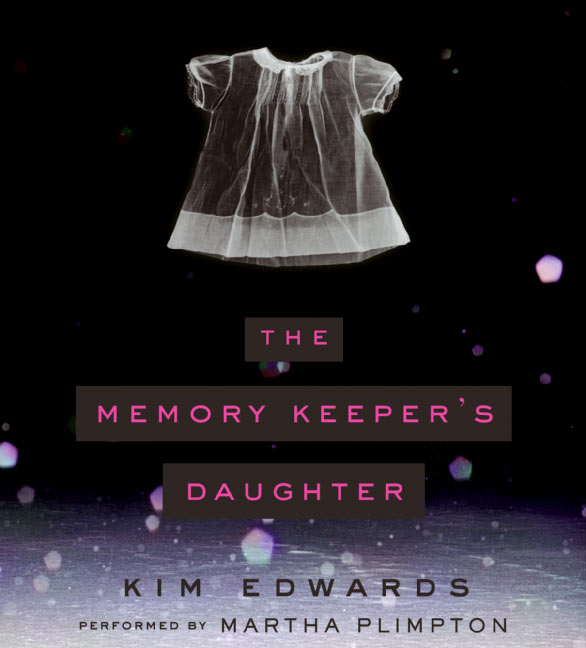
The Memory Keeper's Daughter and The Time Traveler's Wife


Well, here are two interesting books I've read recently. First, I'll tell you that The Memory Keeper's Daughter by Kim Edwards was great. I thought it was inventive, well written and engaging. Even if some things were implausible, I liked this book a lot. Briefly, it is the story of a doctor who delivers his own set of twins, one of which is a Down's Syndrome baby. This book is all about making choices and telling lies, then living with bad choices and lies that are perpetuated with sad results. 5 stars.

The second book, The Time Traveler's Wife by Audrey Niffenegger was trippy. Even though the main character, Henry, is a librarian, the author was losing me when she had him shelving books. (We don't do that folks. Well, rarely, and not in the course of a typical day. Please, author, do your homework.) But when she characterizes him several times: "well, he looks like a librarian" or something to that effect, I mumbled hateful words under my breath. So, I ask, just what does a librarian look like? How long must we keep perpetuating silly stereotypes? In case you can't tell, I hate the simple mindedness of stereotyping anyone. I would have been bothered if it had been an accountant, doctor, used car salesperson, or lawyer. (Well, maybe not lawyers. gentle smile inserted here.) Also, I had a beef with the language. I got bothered by her cavalier use of crude anatomical descriptions. For an aspiring writer who I assume wants her work to be considered literature, not trash, this was a disconnect. The theme was, like I said, a bit trippy. I could deal with the concept of Henry's moving through time involuntarily. In fact, I think it was engaging and innovative. That plus the fact that the book had a good sense of place (Chicago) I finished it, though by the end I was wondering why. My low rating is because language has power; potty mouth language shows weakness. I don't give it much of a rating . 1 1/2 stars might even be too kind.

Wit


Oh, my. I saw Wit this weekend after getting it from my wonderful Netflix. This movie was just about the best acting I've seen. Emma Thompson is her outstanding self. The dialog is sharp and insightful. The screenplay is wonderful, funny, sad, ironic, and highly telling about contemporary academic and medical communities. I can't think of any other movie I've seen recently that has affected me more. Oh, my. Can I give it about 10 stars? There are so many wonderful lines. I have to share one. It goes something like: "Do not go back to the Library. Go out and live." How can one go wrong with advice like that? Take it from me, as one who lives in the Library. Yes, there is life inside books and movies, but there is a bigger life in the world for us to experience for ourselves.